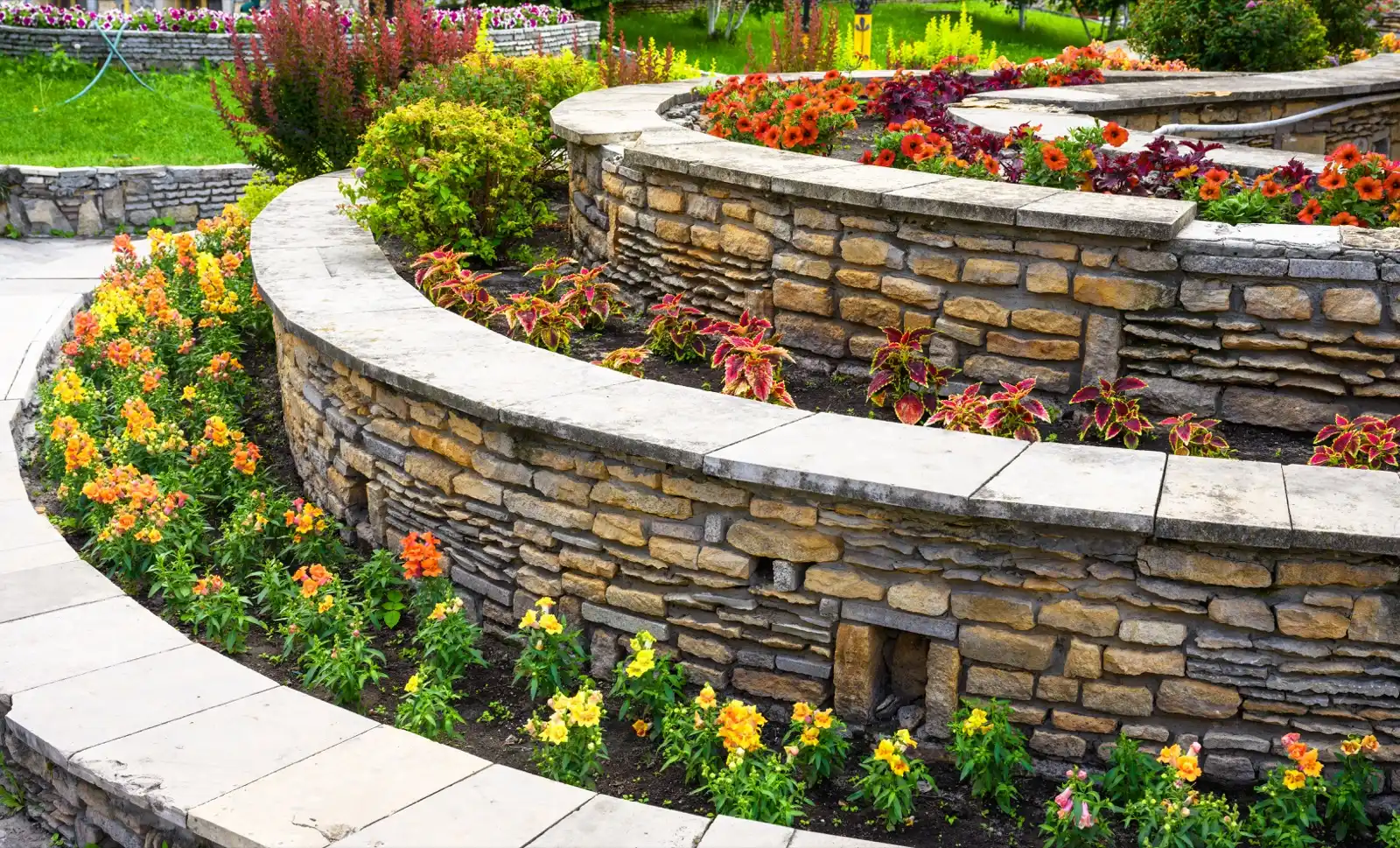
Meridian Retaining Walls helps homeowners in Meridian and seven nearby cities plan retaining wall installation, in block, boulder, concrete or gabion. Meridian requires a permit for a wall over 4 feet, measured from the bottom of the footing to the top of the wall. A typical project runs $3,500 to $9,400 nationally.
Maybe you want to level the yard, hold back a slope or edge a patio or driveway. Before you call, measure the length and the tallest height, and photograph the ground and the way in for a machine.
- Permit line in Meridian
- Over 4 ft from the bottom of the footing
- Block without reinforcement
- Typically 3 to 4 ft, less with poor soil or a load above
- Typical block price
- $15 to $35 per sq ft of wall face
- Dig notice
- 2 to 10 business days
Retaining wall installation in Meridian by wall type
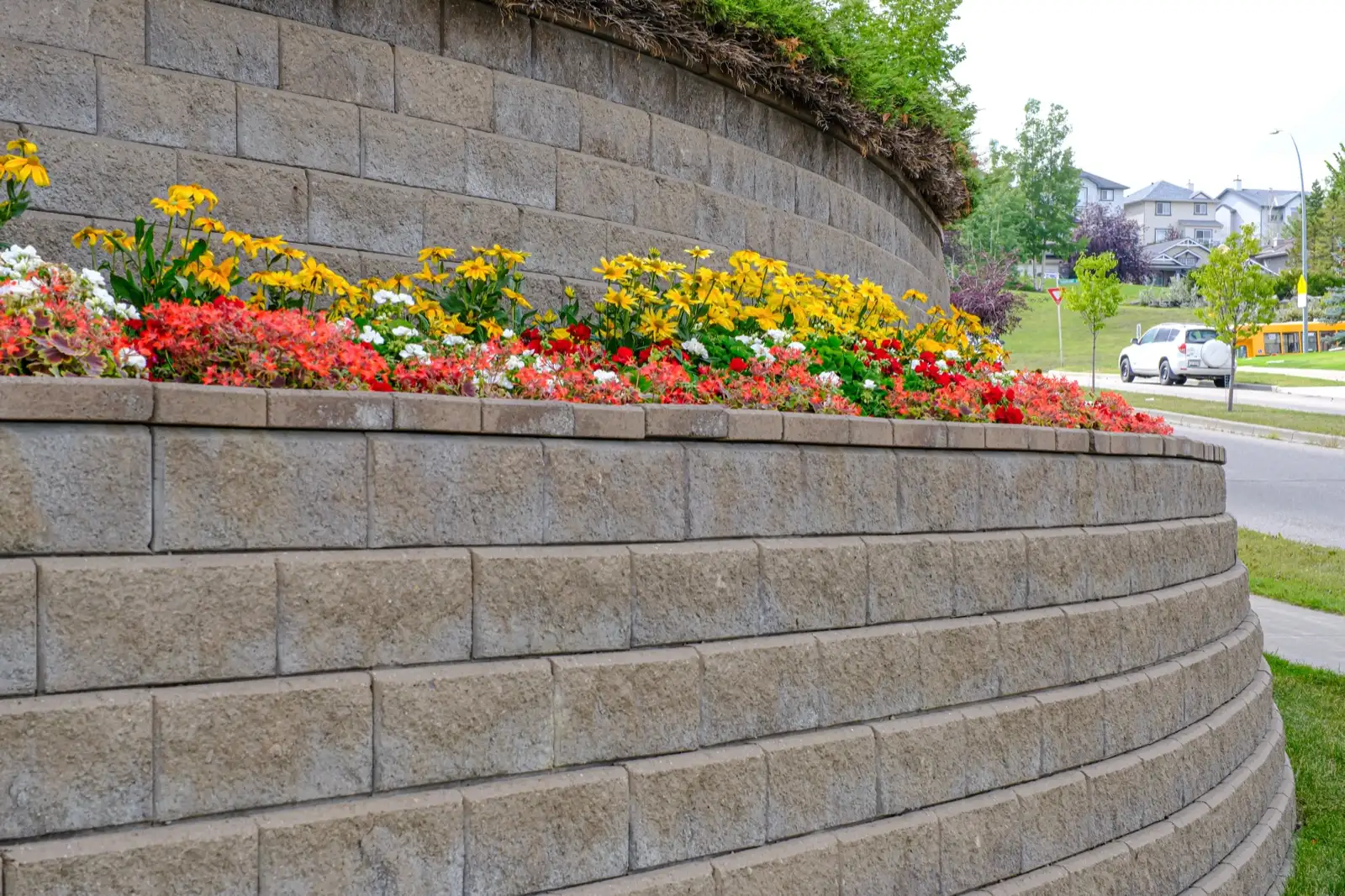
Block retaining wall installation
For a yard that wants a clean stacked face. Block retaining walls are priced by face area and height.
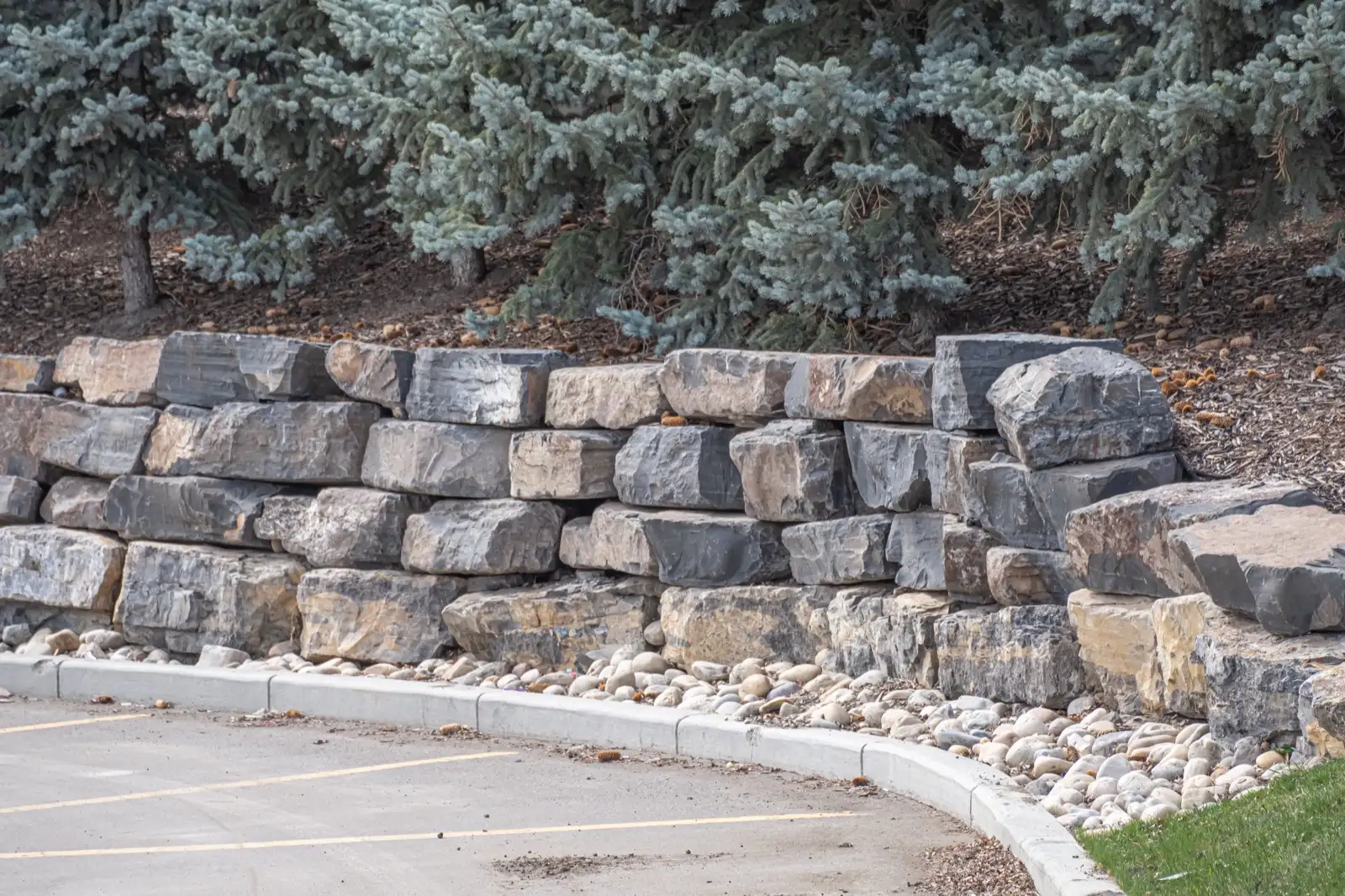
Boulder and rock retaining walls
For a slope or bank held in rock, on a line a machine can reach. With boulder retaining walls, federal rockery guidance has the face leaning back into the slope, between 4:1 and 6:1.
Poured concrete and CMU retaining walls
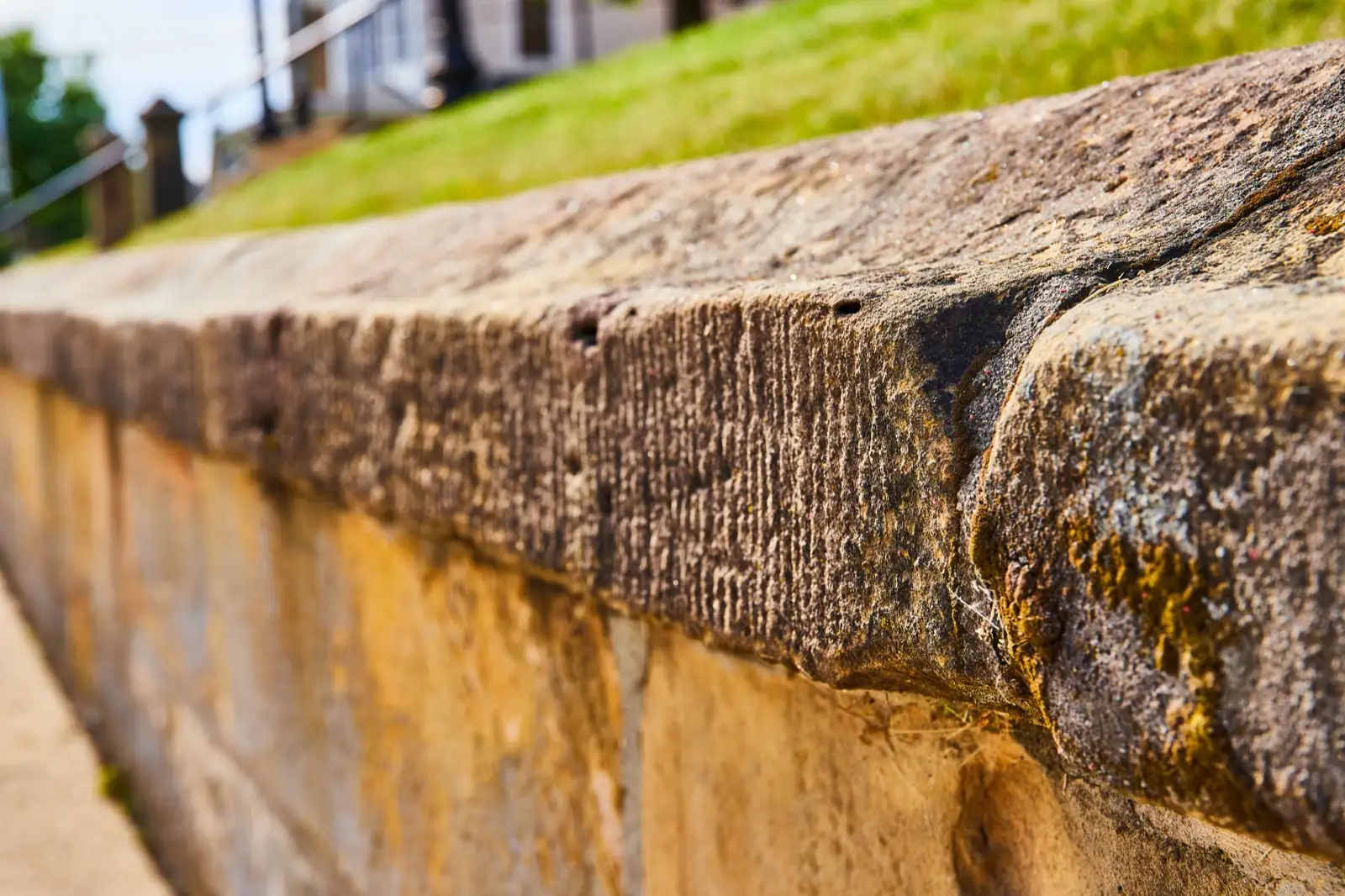
For a poured wall or a reinforced block (CMU) wall beside a driveway or along a lot edge. Concrete retaining walls need a footing and steel, and concrete trade guidance puts that footing at least 2 feet deep and below the frost line.
Engineered retaining walls over 4 feet
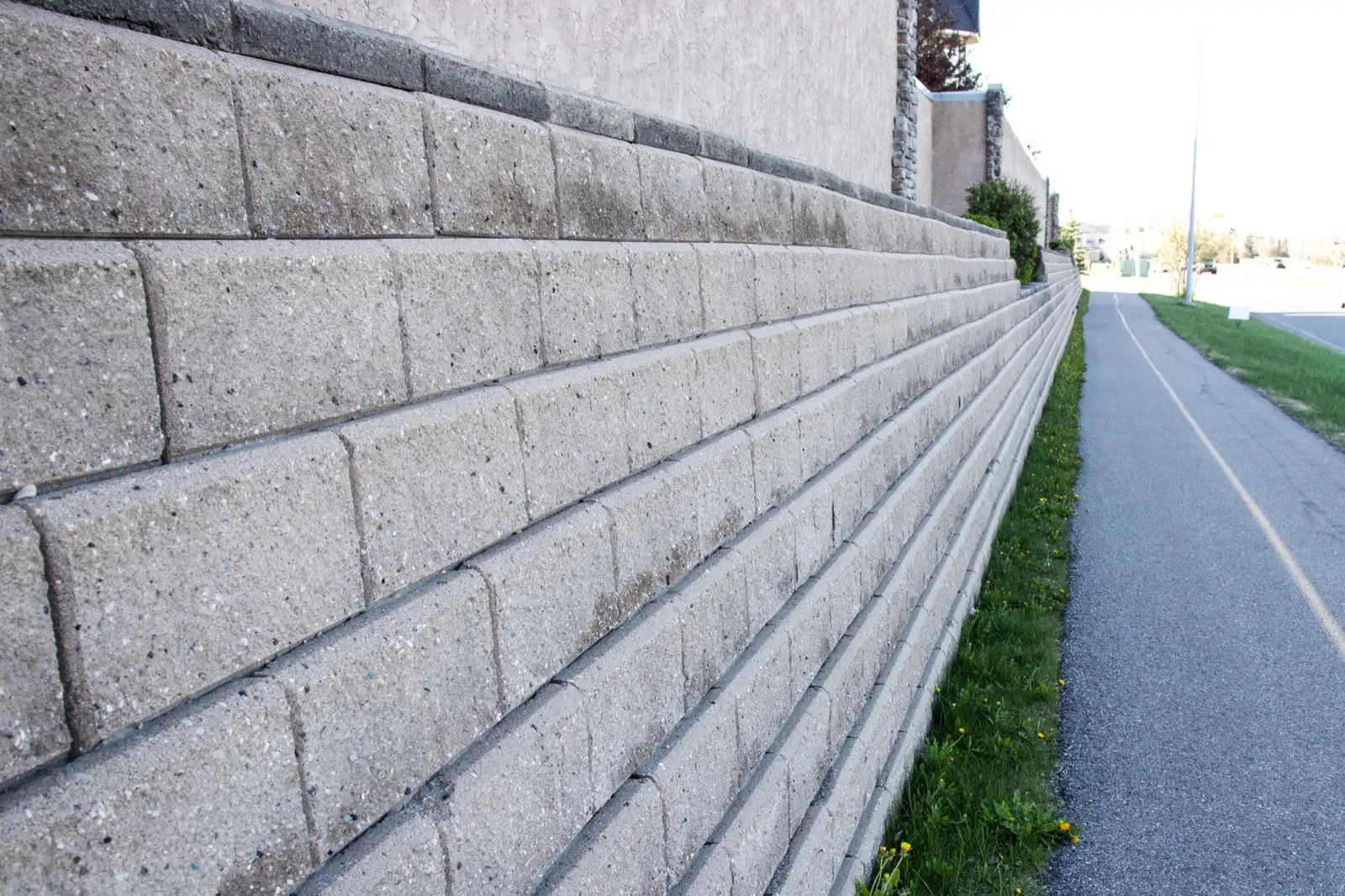
For tall or loaded walls. Engineered retaining walls need stamped plans, which Idaho’s engineering board says must come from an Idaho licensee.
Tiered retaining walls for a sloped backyard
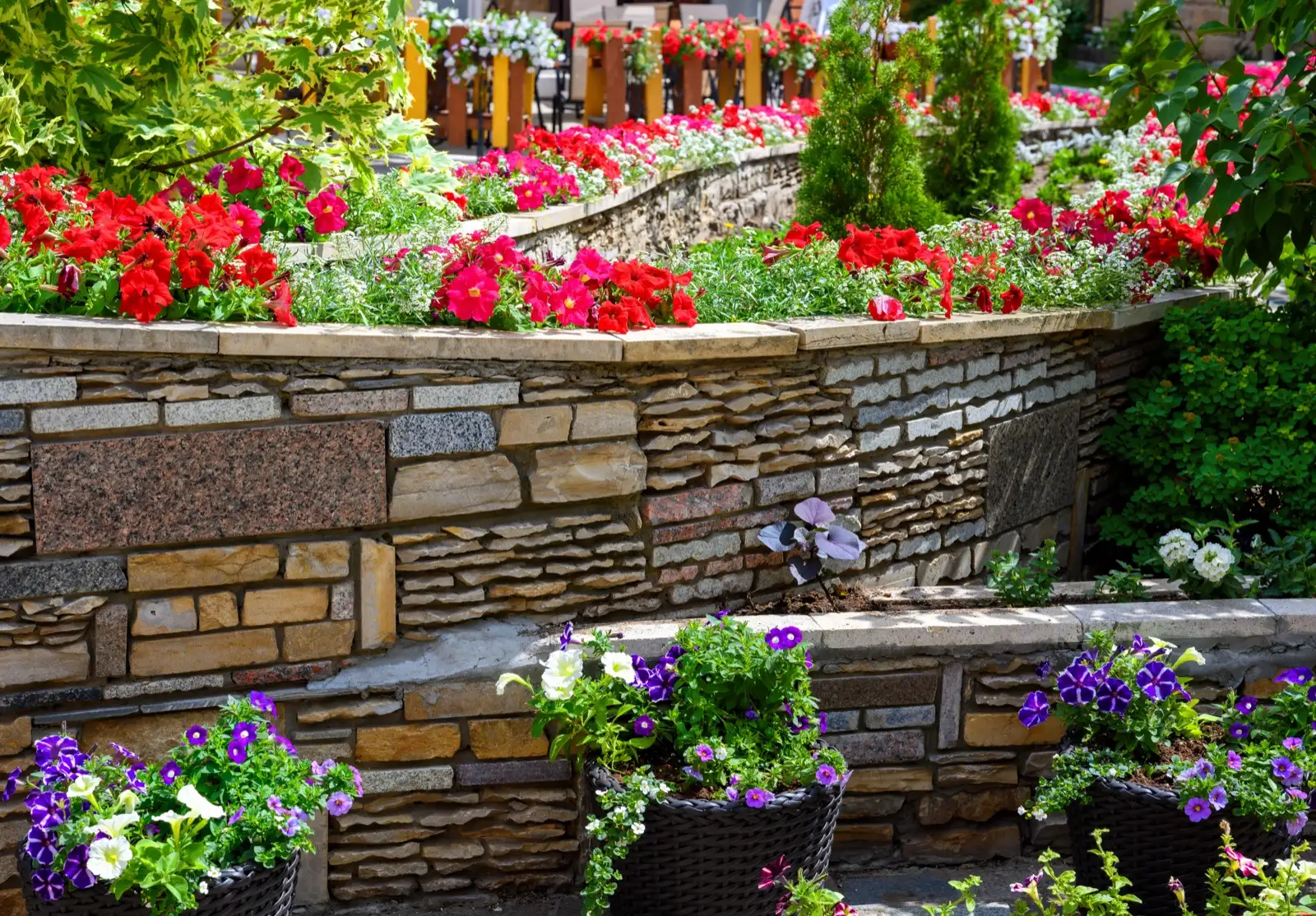
For a slope too tall for one short wall. Tiered retaining walls split the height between two or more walls, and the spacing between them matters.
Commercial retaining walls
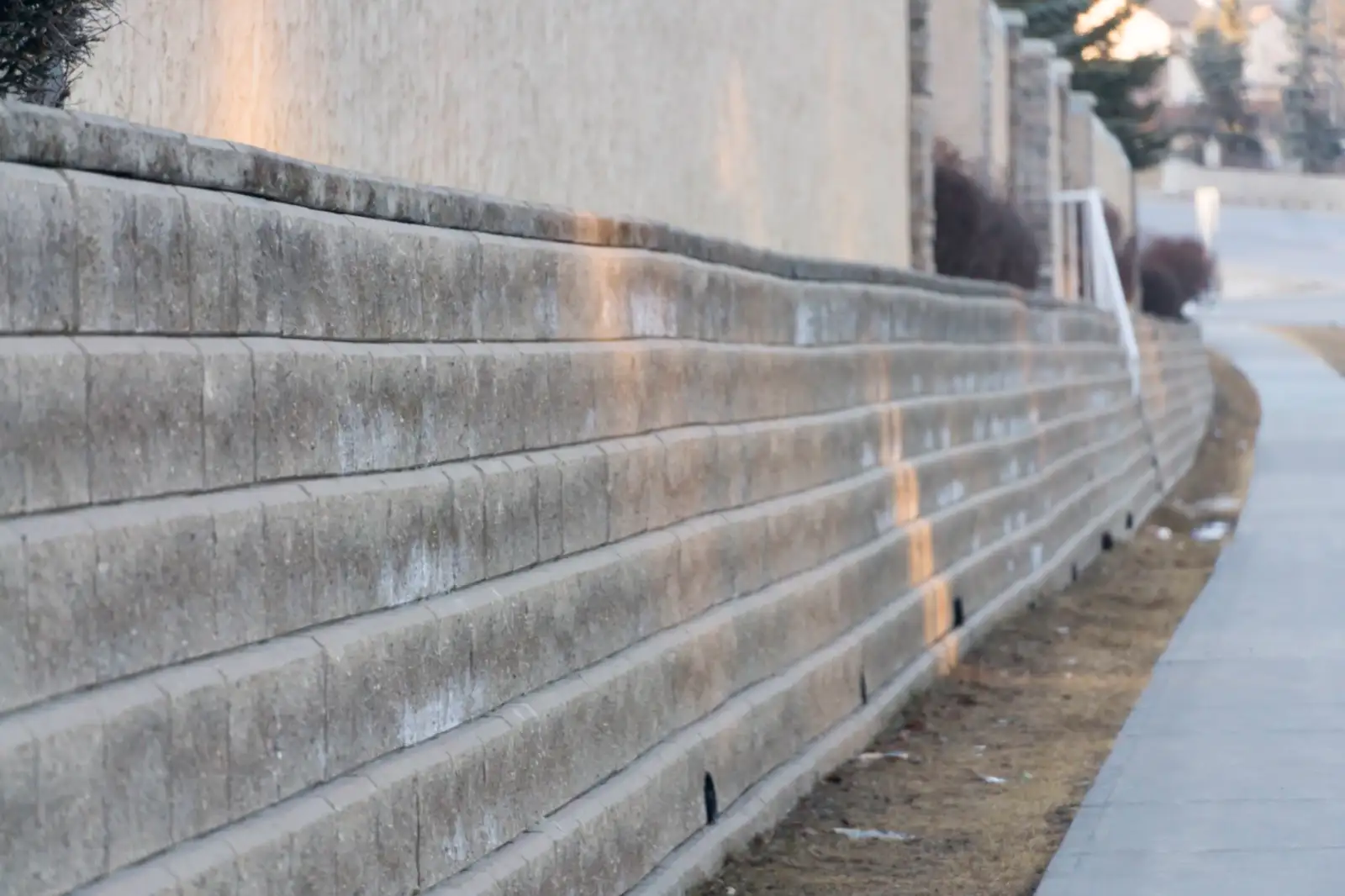
For subdivision, HOA and site walls. Commercial retaining walls start with your plans and schedule.
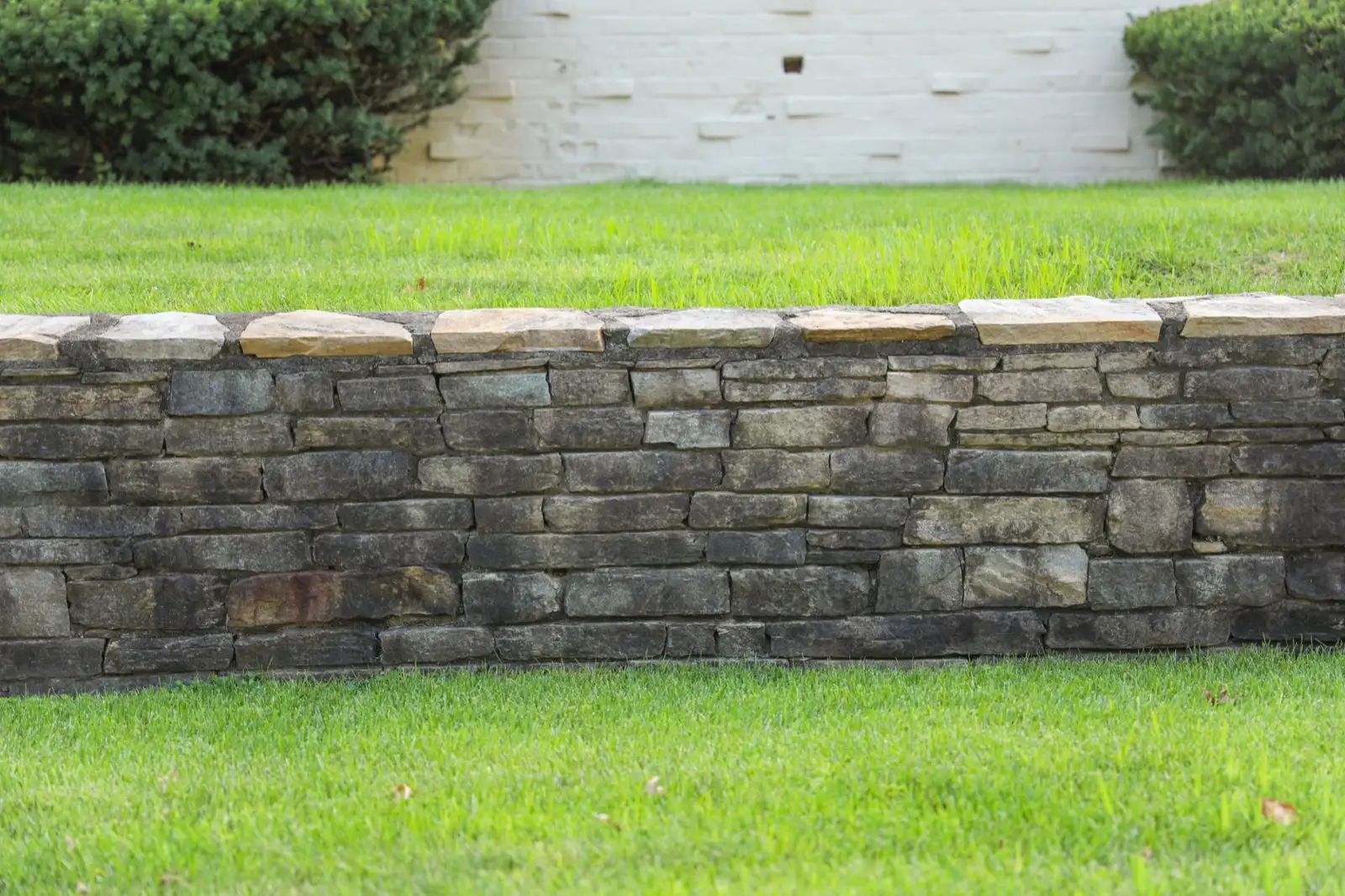
Small garden retaining walls
For bed edges and low borders. A length, a height and a photo are enough to start on small garden retaining walls.
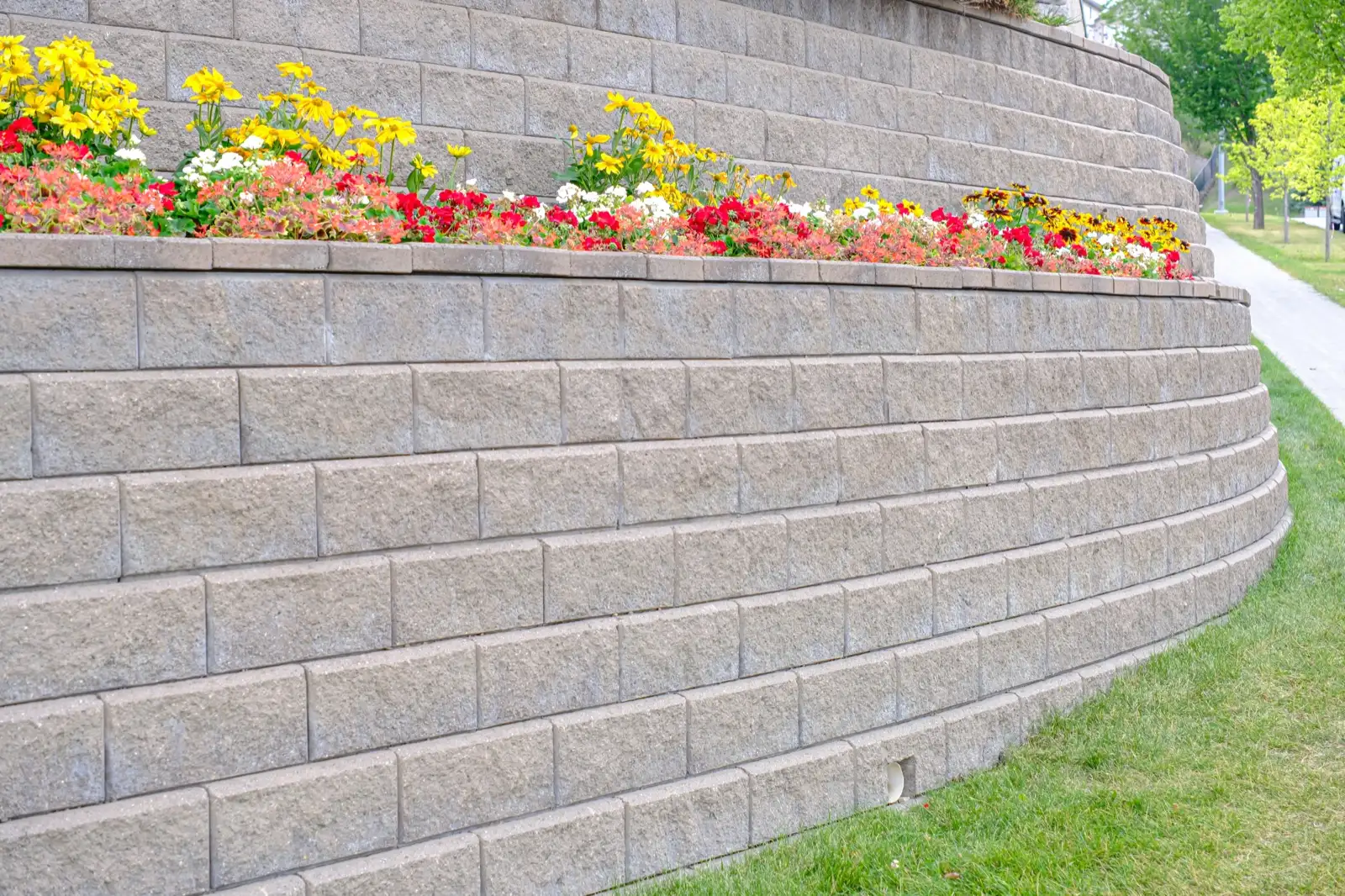
Driveway retaining walls
For a wall beside or under a driveway or parking pad. With driveway retaining walls the load is what counts: under Idaho’s adopted code, a wall more than 24 inches tall that carries a load besides soil needs an engineered design.
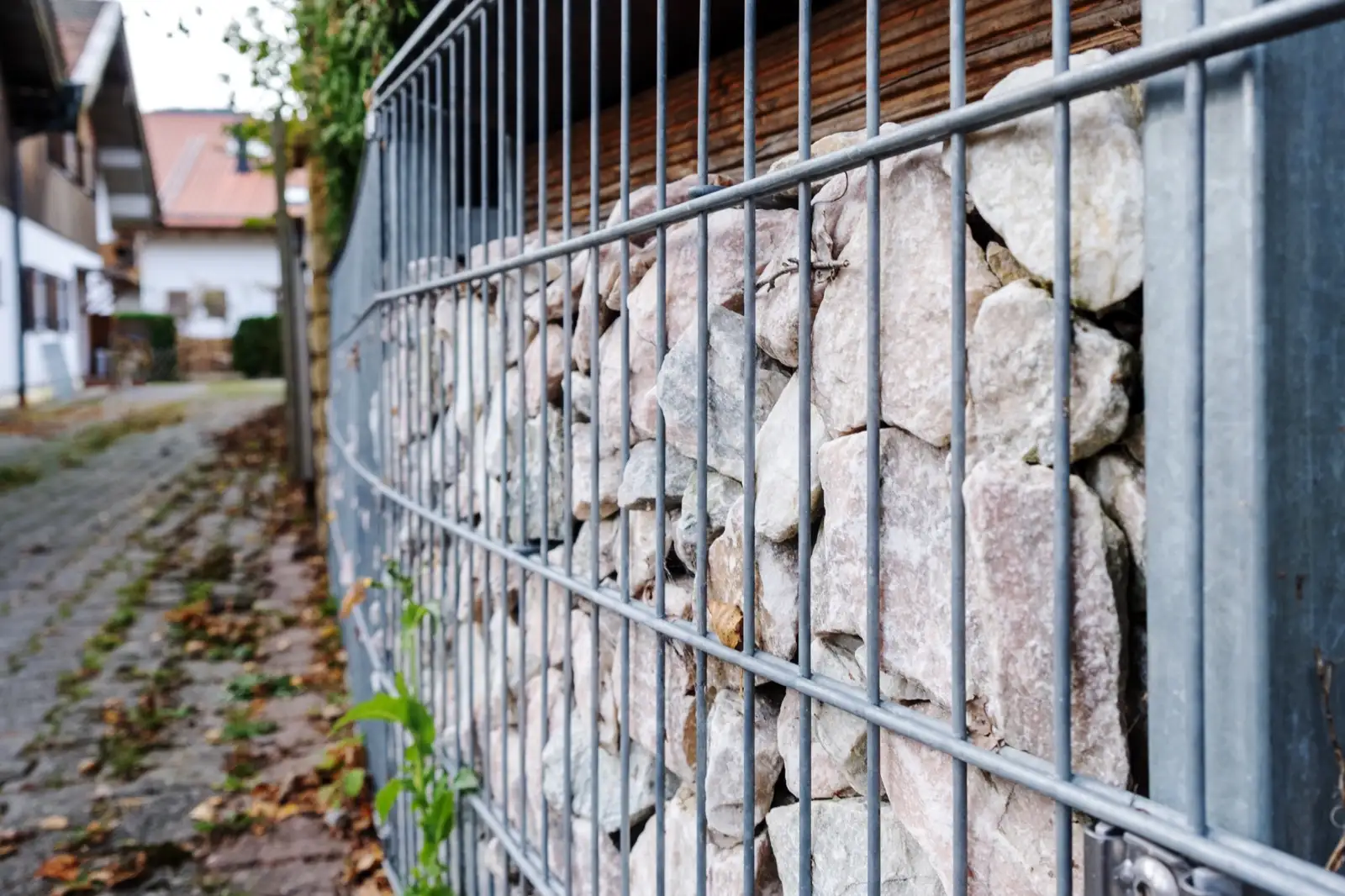
Gabion retaining walls
For a gravity wall of rock-filled wire baskets, sized by basket and length. Gabion design guidance says these walls normally don’t need a separate drainage layer.
Get your retaining wall on the calendar
Have the measurements handy and give us a call.
How much does retaining wall installation cost in Meridian?
A new wall’s price mostly follows the square feet of face, the material and your site. Below are typical national ranges per square foot of face, worked out for one wall.
| Wall type | Typical price per sq ft of face | 40 ft long, 3 ft high (120 sq ft) |
|---|---|---|
| Interlocking block | $15 to $35 | $1,800 to $4,200 |
| Poured concrete | $20 to $40 | $2,400 to $4,800 |
| Natural stone or boulder | $20 to $90 | $2,400 to $10,800 |
| Gabion | $10 to $40 | $1,200 to $4,800 |
Typical US installed prices, October 2026. Your site sets the real figure.
Treat these as general ranges, not a quote or an estimate for your wall. Price climbs with height: typical price tables put a 6 foot wall at three times a 2 foot wall of the same length, before any engineering. Machine access, digging conditions, drainage and permits (typically $40 to $450) move it too. The retaining wall cost page runs more sizes. Tell us its length and height, and we’ll help you find an installer to price it.
Call (208) 445-1999 to talk it throughor request a quote online
How long does retaining wall installation take?
The first date is the utility locate: Idaho’s dig law says the locating service has to be notified at least 2 and not more than 10 business days ahead. Over the permit line, Meridian lists a residential permit at 7 to 10 business days from submittal to approval, as last published by the city in 2021.
A canal changes the calendar. The Nampa & Meridian Irrigation District gives roughly six weeks of land use change review, and flow-affecting work runs October 15 to March 15 unless its water superintendent says otherwise.
Small block walls of about 60 to 160 square feet of face commonly take 2 to 4 days to build, and larger engineered walls 1 to 2 weeks or more. Times vary, so ask for a schedule in writing.
How a retaining wall is installed, step by step
This is for segmental block.
- Utility locate Locates are free through 811. The ticket is renewed if digging hasn’t started within three weeks, and the state’s Damage Prevention Board says digging within 24 inches of a marked line should be done by hand.
- Trench and base Block manufacturer guidance sets the trench 24 inches wide and 6 inches deep, plus 1 inch per foot of wall height. Under 4 feet it’s 18 inches wide and 4 inches deep, plus the buried block. At least 6 inches of base rock is compacted in at least two passes.
- Buried first course On a slope the first row starts at the lowest point, and block maker guidance says every step-up block must be completely buried.
- Drain rock and pipe At least 12 inches of gravel fill goes behind the block. A drain pipe goes behind any wall over 4 feet, and behind any wall in silty or clay soil, per block manufacturer guidance.
- Backfill in lifts On geogrid walls, block manufacturer guidance has fill placed in lifts (layers) of 8 inches or less, compacted to 95% Standard Proctor, with heavy equipment kept at least 3 feet from the back of the wall.
- Final grade The ground is graded 2 to 5 percent away from the wall, per manufacturer guidance.
Want a second opinion first?
Tell us what you are weighing and we will talk it through.
Which type of retaining wall fits your yard?
Start with how tall the wall has to be and what sits above it.
| Wall type | What industry guidance calls for |
|---|---|
| Segmental block | Typically 3 to 4 ft unreinforced, less with poor soil or a load above |
| Poured concrete | Base slab about 50 to 70% of wall height, on a footing below the frost line |
| Reinforced block (CMU) | Footing below frost depth; safety factors of at least 1.5 for overturning and sliding |
| Boulder or rockery | A 12 in leveling course of crushed rock under a face leaning back |
| Gabion | Rock-filled baskets, infill stone of about 150 to 300 mm, fabric behind |
With block, ask for the spec sheet. Segmental units are specified at a minimum average compressive strength of 3,000 psi and less than 1% weight loss after 100 freeze-thaw cycles.
What sits under and behind a retaining wall in Meridian soil?
What’s under the base rock is the local part. The Purdam soil, extensive in southwest Idaho, has a cemented hardpan 20 to 40 inches down and a subsoil of 24 to 32 percent clay. Meridian’s city code sets a 24 inch frost line. That’s inside the hardpan band, so on the valley’s terrace soils a footing dug to frost depth meets cemented ground.
Behind the wall, water. Canal seepage is the largest source of groundwater recharge in the Treasure Valley, according to the state’s water budget. If a canal or ditch runs near your wall line, tell us when you call.
What a retaining wall installation quote should include
Everything on this list gets buried. Get each number in writing, then photograph it against a tape measure before it’s covered.
- Base depth Inches of compacted base rock under the first block. The block industry association’s minimum is 6.
- Buried block Inches of the first course below finished grade. Block manufacturer guidance gives a minimum of 6.
- Drain rock The width of gravel behind the block, against the association’s 12 inch minimum.
- Drain pipe Whether one is included, and why not if it isn’t.
- Pipe outlets Where the water gets out. The association’s design note puts outlets no more than 50 feet apart.
Good to know Meridian’s 4 foot permit line runs from the bottom of the footing to the top of the wall. Near that height? Ask your permit office how it measures, and remember a wall supporting a surcharge loses Meridian’s exemption at any height.
Retaining wall installation questions
How much does retaining wall installation cost?
A typical project comes to $3,500 to $9,400, and interlocking block to $15 to $35 per square foot of face. Both are typical national ranges that change over time, not a price for your wall.
Who installs retaining walls near me?
Independent local retaining wall contractors. Tell us about your wall and we’ll help you find one who works in your city: Meridian, Eagle, Star, Kuna, Garden City, Middleton, Caldwell and Nampa. Call us, or send the wall’s details and photos through the form.
What size retaining wall do I need, and how high can it go without reinforcement?
Segmental block with no reinforcement can typically go 3 to 4 feet, per the block industry association. One manufacturer wants an engineer over 36 inches. The code requires an engineered design for a wall retaining more than 48 inches of unbalanced fill, or one more than 24 inches tall that carries a load besides soil.
Can I install a retaining wall myself?
Idaho doesn’t stop you. The state exempts owners doing their own work on their own land from registration, if they don’t plan to sell within 12 months, and Dig Line has a homeowner ticket path. Engineering is the hard stop: code-required plans must come from an Idaho licensee, and owning the lot doesn’t change that.
Don't see your question? Call (208) 445-1999.
Sources and review date
Reviewed October 2026. Sources: Idaho residential code, dig law, engineering board and Damage Prevention Board; Dig Line; City of Meridian code and permit handouts; Nampa & Meridian Irrigation District; block industry association and manufacturer installation guides; concrete, gabion and federal rockery guidance; USDA soil survey; Idaho Department of Water Resources; contractor-published build times; national cost guides (January 2025 and October 2026).